Chinese New Year Lantern Traditions: Cultural Significance and Modern Applications
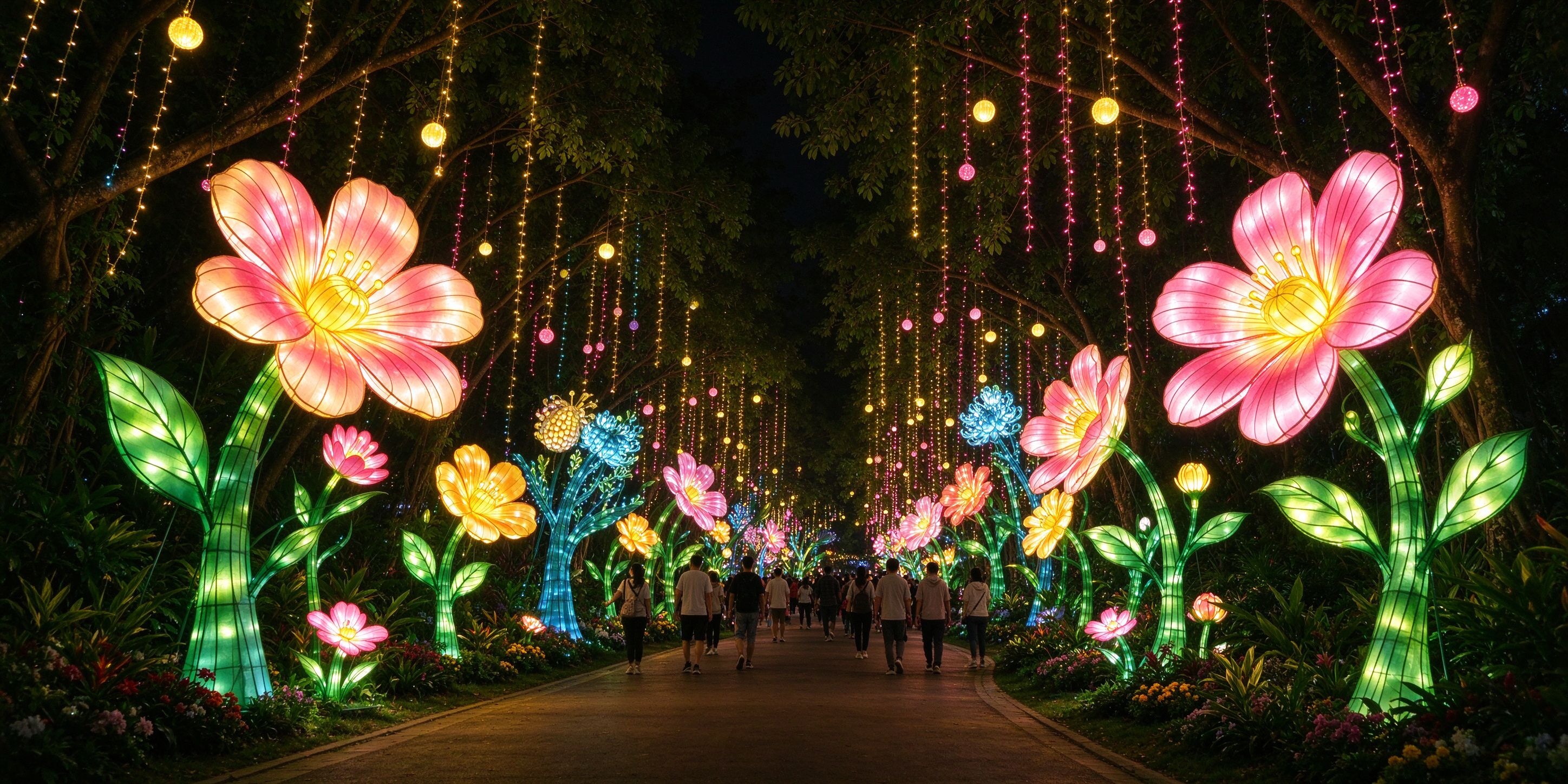
The Chinese New Year lantern is far more than a decoration: it is the closing act of the most important holiday in the Chinese calendar. For fifteen days, families reunite, red envelopes change hands and cities glow with festive light. Then, on the fifteenth night — the yuanxiao festival — the lanterns take center stage, and the entire celebration culminates in a festival of light that has run for more than two thousand years. Today that tradition has gone global, and understanding its cultural roots is essential for anyone planning a chinese new year lights event, a lunar new year lanterns display, or a spring lantern festival for an international audience.
The Origins: Why the Fifteenth Night Shines
The Lantern Festival (元宵节, Yuanxiao Jie) marks the first full moon of the lunar year — a night of unity, fertility and renewal in agrarian Chinese culture. Historical records trace organized lantern displays back to the Han dynasty, when the imperial court lit lanterns to honor the Buddha, and the practice blossomed during the Tang dynasty into a three-night citywide festival, later extended to five nights by the Song. By the Ming dynasty, lanterns were an accepted part of urban life across China, and the craft of lantern making had become a respected art form — nowhere more so than in Zigong, the city that would eventually become the world's lantern-manufacturing capital.
The traditions of the night are precise. Families eat tangyuan, round glutinous rice balls that symbolize reunion and wholeness. Children carry small handheld lanterns through the streets. Riddles written on lanterns challenge the clever and reward the lucky — a social game that has survived into the digital age. And in the south, dragon dances thread through the crowds, the dragon chasing the pearl of wisdom exactly as the festival chases the first full moon of the year. Every one of these elements is a potential "moment" that a modern event can recreate for audiences who have never experienced them.
Symbolism in Every Shape and Color
For event designers, the symbolism of the Chinese New Year lantern is a ready-made storytelling language. Red dominates — it is the color of joy, luck and warding off evil — which is why the red round lantern is the universal signifier of the season. Gold signifies wealth and prosperity. Fish lanterns represent surplus and abundance, because the Chinese word for fish (yu) sounds like the word for "more." The koi, in particular, symbolizes perseverance and success. Peonies stand for riches and honor, and the phoenix for renewal. A skilled lantern maker composes these symbols the way a composer writes music — each element carries meaning, and together they tell the story of the new year.
That symbolic density is exactly why chinese new year lantern installations photograph so well and travel so well across cultures. You do not need to explain a dragon to a Western audience for them to feel its power, any more than you need to explain a Christmas tree to a Chinese audience. The Chinese palace lantern and the classic red round lantern have become global shorthand for celebration, which makes them dependable crowd-pleasers in multicultural cities.
From Temple Streets to Global City Events
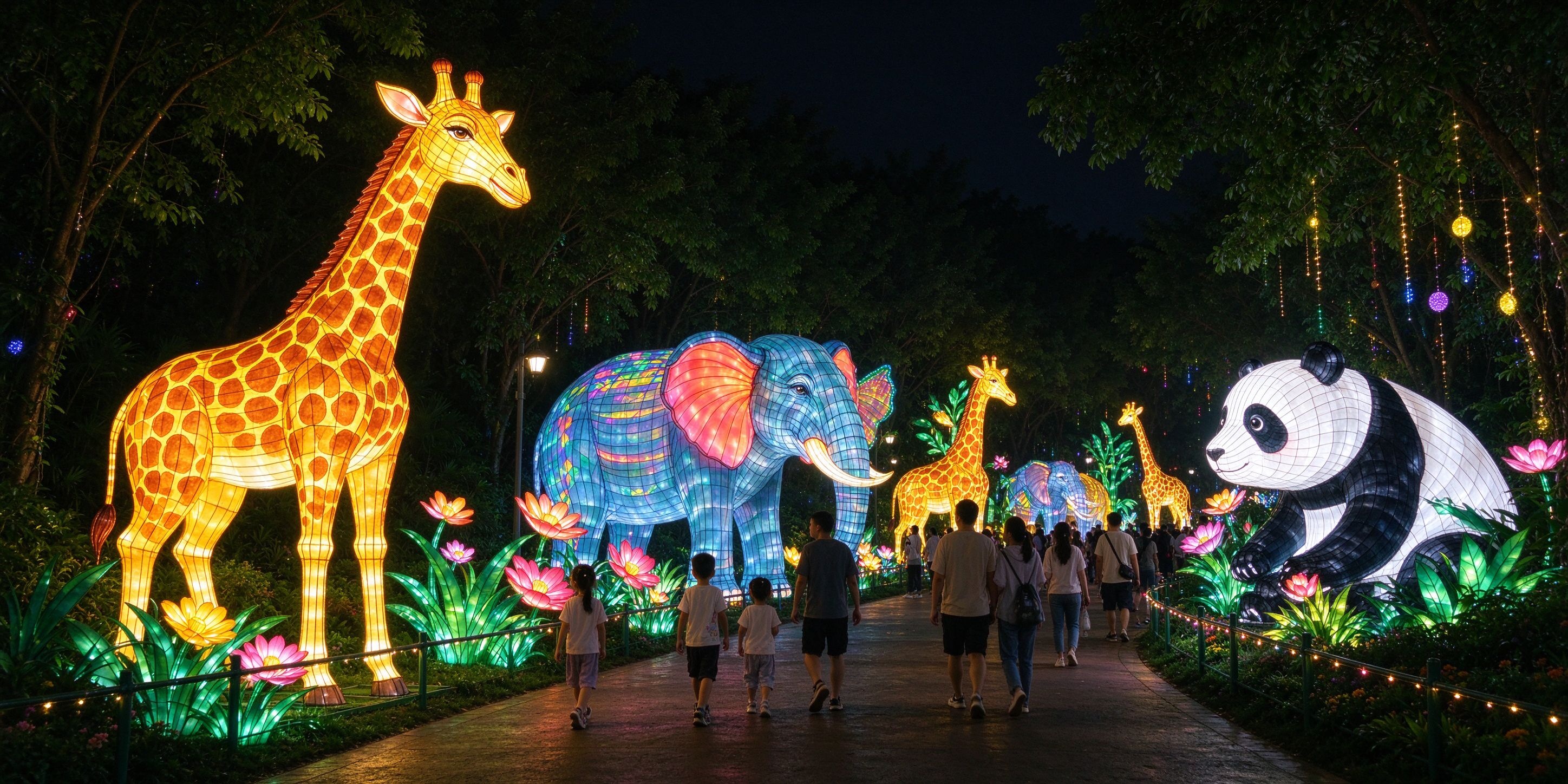
The modern chinese new year lantern industry was born in the 1980s, when Zigong began exporting its festival culture. What started as lantern festivals inside China — the Zigong International Dinosaur Lantern Festival being the most famous — evolved into traveling exhibitions that now appear in more than fifty countries. Today's events are a deliberate fusion: the traditional spring lantern festival vocabulary (dragons, palaces, zodiac animals, flowers) combined with local elements — a Sydney festival adds Australian wildlife lanterns, a Paris event adds the Eiffel Tower, a Texas zoo adds armadillos and bluebonnets. This localization strategy is the single most important lesson for buyers: the most successful chinese new year lights events are not pure exports; they are collaborations that respect both the tradition and the host culture.
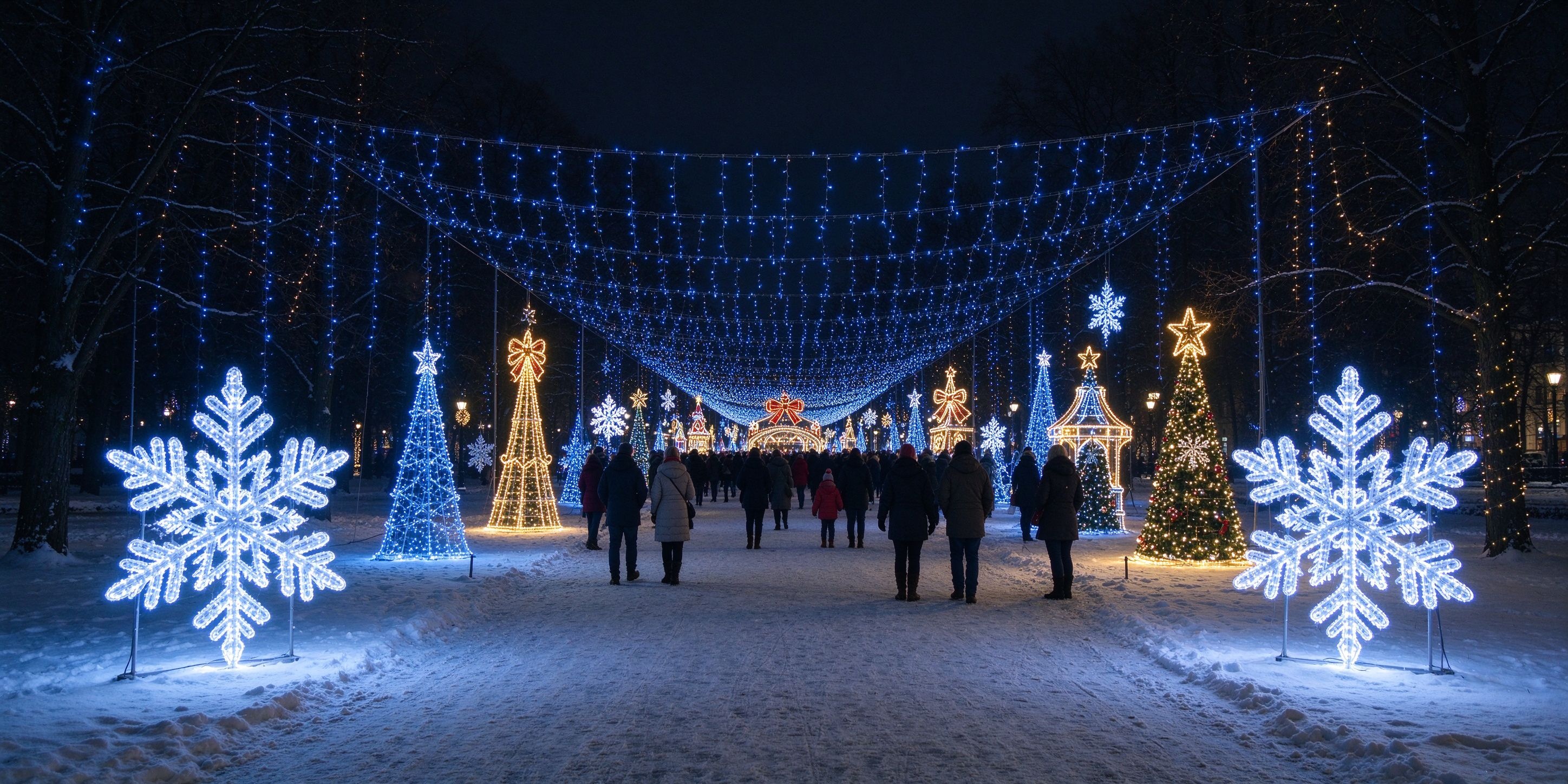
Commercially, the timing is powerful. The lunar new year falls in January or February, squarely in the northern hemisphere's winter event season, which means venues can program a Chinese New Year light display immediately after the Christmas season ends — extending the revenue window with minimal incremental infrastructure. Zoos, botanical gardens and malls that already own the holiday-lights audience simply re-theme their footprint with Chinese New Year dragon dance lanterns and zodiac displays. Cities use the occasion to celebrate their Asian communities and draw tourism dollars at a traditionally slow time of year.
Designing a Modern Lunar New Year Display
If you are planning a lunar new year lanterns event, four design decisions will shape the experience:
- Choose the narrative year. Every lunar year belongs to one of the twelve zodiac animals. Build the display around the coming year's animal — it gives the event a timely hook, a natural hero piece and a built-in social media angle. The year of the dragon and the year of the snake, for example, each offer distinct visual identities that audiences will recognize.
- Respect the full moon. If the event can run to the fifteenth day, program a finale on the night of the full moon — a moment that gives the show a dramatic, culturally authentic climax.
- Include interactive tradition. Lantern riddles are cheap, authentic and wildly popular with families. Print riddles on physical lantern tags or project them; reward correct answers with a small gift. It turns passive viewing into participation.
- Localize deliberately. Commission local elements — native animals, landmarks, local heroes — to sit alongside the traditional dragons and palaces. Localization is what makes the event feel like the host city's own, and it is the difference between a cultural exhibit and a beloved annual tradition.
For the technical side, the same engineering rules apply as any outdoor light display: IP-rated components, wind-load anchoring and flame-retardant fabrics. A new year countdown lantern with a timed light sequence can anchor the finale, and a themed gate at the entrance — our traditional Chinese gate lantern is a favorite — turns the threshold into a ceremonial beginning.
Commercial Value and Best Practices
For venue operators, the chinese new year lantern season offers three measurable returns: incremental attendance in a low-season month, cultural credibility with local Asian communities and international visitors, and sponsorship surfaces that are far more photogenic than banners. Best practices from successful events include starting marketing eight to ten weeks out, using the zodiac hero as the campaign visual, pricing an "opening night" premium experience, and creating a lantern-making workshop for school groups during the day — education programs convert daytime empty hours into revenue and goodwill.
Conclusion
Chinese New Year lantern traditions carry two millennia of meaning, and they have proven remarkably portable. For event professionals, the opportunity is not merely to reproduce the tradition but to collaborate with it — pairing authentic cultural elements with local creativity, and letting the fifteenth-night full moon give the season a natural, beautiful ending. Done with respect and craft, a lunar new year lights event is one of the most culturally rich and commercially dependable additions a venue can make to its annual calendar.
Plan Your Lunar New Year Lantern Event
Tell us your venue, target dates and zodiac-year theme. We will prepare a free concept proposal and quotation within 48 hours, tailored to your city and audience.
Get a Free Quote☎ +86 13990006666 | ✉ 1712646264@qq.com