Lantern Festival Marketing Strategy: Driving Ticket Sales Through Digital Channels

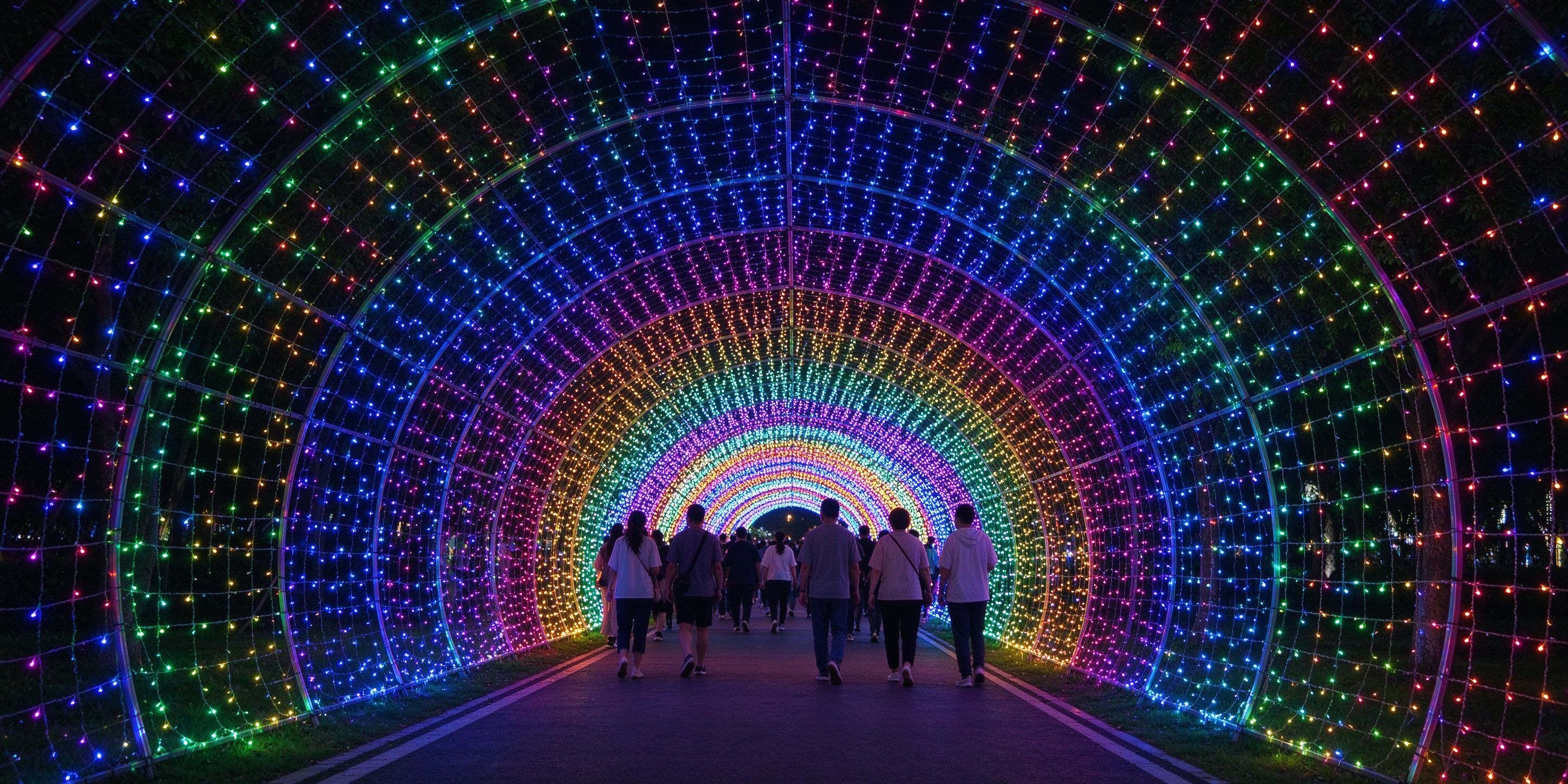
A lantern festival is one of the most photogenic products in live entertainment — and that is both its greatest marketing asset and its greatest trap. The trap is assuming the visuals sell themselves. In every market we supply, the festivals that sell out are not necessarily the most beautiful; they are the ones with a deliberate digital marketing engine. From the first teaser to the final weekend push, ticket sales follow a predictable curve, and each phase needs its own channel mix, content and budget discipline. This guide lays out the full lantern festival marketing strategy — the phases, the content engine, the paid media architecture and the metrics that matter.
Phase One: The Tease (10–8 Weeks Out)
Marketing begins the moment the design is approved, not the moment tickets open. In the tease phase, the goal is anticipation and email-list growth, not conversion. Launch a dedicated event landing page with a "notify me" capture, release concept renders and drone fly-throughs of the planned display, and run a teaser campaign across social channels that shows silhouettes, sparkles and mystery rather than the full reveal. This is the phase to announce the theme — a spring lantern festival, a seasonal light festival or a holiday lights display — because the theme is the hook that earns media coverage and pre-registrations. Venues can anchor that hook on proven festival-theme lanterns: a Chinese New Year dragon dance lantern, a Halloween pumpkin lantern or a mid-autumn moon palace lantern — each with an instantly recognizable look that the pre-sale creative can build on from day one.
Two tactics reliably outperform in the tease phase. First, partner with the venue's existing audience: the zoo, garden, museum or mall that hosts the event already owns a highly relevant list and social following, and a co-branded pre-announcement converts their trust into your early demand. Second, secure one or two local media partners early — a lifestyle outlet or local TV station gets an exclusive "first look" in exchange for coverage, which creates the social proof every later campaign needs.
Phase Two: The Launch and Early-Bird (8–6 Weeks Out)
Launch week is the highest-leverage moment of the campaign. Open ticket sales with a limited early-bird discount — typically 20–30% off for the first few hundred tickets or the first week of sales — and pair it with a "first weekend" premium experience to reward early commitment. The early-bird window does three jobs at once: it generates immediate revenue and cash flow, it creates scarcity-driven urgency, and it seeds the event with the most enthusiastic audience, whose posts will power later phases.
Paid media should switch on in this phase. The proven architecture is: search ads on high-intent queries (the venue name plus "lights," "lantern festival," "tickets"), social ads targeting family and date-night audiences within a defined drive radius, and retargeting pixels fired at every visitor to the ticket page. Budget allocation follows the funnel — roughly two-thirds to awareness and interest in the first half of the campaign, flipping to conversion-heavy tactics in the final two weeks.
The Content Engine: Let the Venue Make the Ads
The content engine is the heart of lantern festival marketing, and it runs on a simple insight: the best advertising creative for a light festival is the festival itself. Before opening, that means commissioning the best possible visual assets — professional drone footage, cinematic walkthroughs and hero stills — and cutting them into a bank of short-form videos sized for every platform. After opening night, the engine switches to user-generated content: a branded hashtag, a photo contest with weekly prizes, and a "share your night" prompt built into the ticket confirmation and the venue's signage.
Influencer partnerships deserve a defined role, not a scattergun spend. Rather than dozens of micro-influencers, the highest-return pattern is a tiered approach: two or three family-and-lifestyle creators with meaningful local reach invited to opening night for an exclusive preview (their content drops during the first weekend when paid media is hottest), then a steady trickle of smaller creators throughout the run. Family creators outperform pure travel creators for lantern festivals because the core buying unit is the household, and their content demonstrates the experience children will have.
Pricing and Ticketing Architecture
Ticket pricing for a lantern festival should reflect value, not cost. The pricing architecture that works: a base adult ticket, a child ticket at roughly 60–70% of adult, a family bundle that discounts the fourth ticket, and a premium tier (early entry, a private viewing zone, or a meet-the-makers experience) at 1.5–2× base. Timed entry windows protect the venue from overcrowding while creating natural scarcity — "only 40 tickets left for Saturday 7:00 pm" is a real, honest scarcity message that converts. Dynamic pricing, where weekends and the final two weeks cost more, is standard practice in the industry and should be communicated transparently rather than hidden.
Week-Of and In-Run Tactics
The week before opening, shift the message from anticipation to logistics: what to wear, where to park, when to arrive, what is included. This is also the moment for weather-proofing the offer — a clear rain-date policy or a "lights still shine in the rain" message prevents weather anxiety from suppressing last-minute sales, especially in regions where spring evenings are unpredictable.
Once the event is running, marketing inverts. Daily organic posts from the venue, live social stories, and same-day ticket pushes become the engine. Re-target anyone who visited the ticket page but did not buy — they are now seeing real proof-of-experience content from opening nights, which removes the exact objection that stopped them. Sponsors' audiences should be activated too: co-promotions where a retail partner gives members a discount code turn the sponsor deal into a distribution channel.
Measurement: The Numbers That Run the Show
Lantern festival marketing should be run like a paid media account, even when most of it is organic. Track five metrics weekly: ticket revenue against forecast, cost per acquisition by channel, early-bird uptake, email list growth, and social engagement rate. The channel mix should shift weekly based on these numbers — if search ads convert at twice the cost per acquisition of social, reallocate. Post-event, the full picture emerges: attendance by channel, family-bundle uptake, upsell rate, and the percentage of visitors who came because of a specific campaign. These numbers are the single best input for next year's budget — the festivals that grow year over year are the ones that measure relentlessly and let the data decide.
Conclusion
Driving lantern festival ticket sales is a campaign, not a poster. Start early, build the list and the mystery; launch with early-bird urgency and a full paid media architecture; feed the funnel with world-class content and tiered creator partnerships; price with a family-first architecture; and manage the final weeks with weather-proofing and retargeting. Above all, measure everything and let the numbers allocate next year's spend. The light show is the product; the marketing is the engine — and both deserve the same professional craft.
Plan a Festival Worth Marketing
Tell us your venue, season and audience. We will design a display engineered to be photographed, shared and sold out — with a free concept and quotation within 48 hours.
Get a Free Quote☎ +86 13990006666 | ✉ 1712646264@qq.com