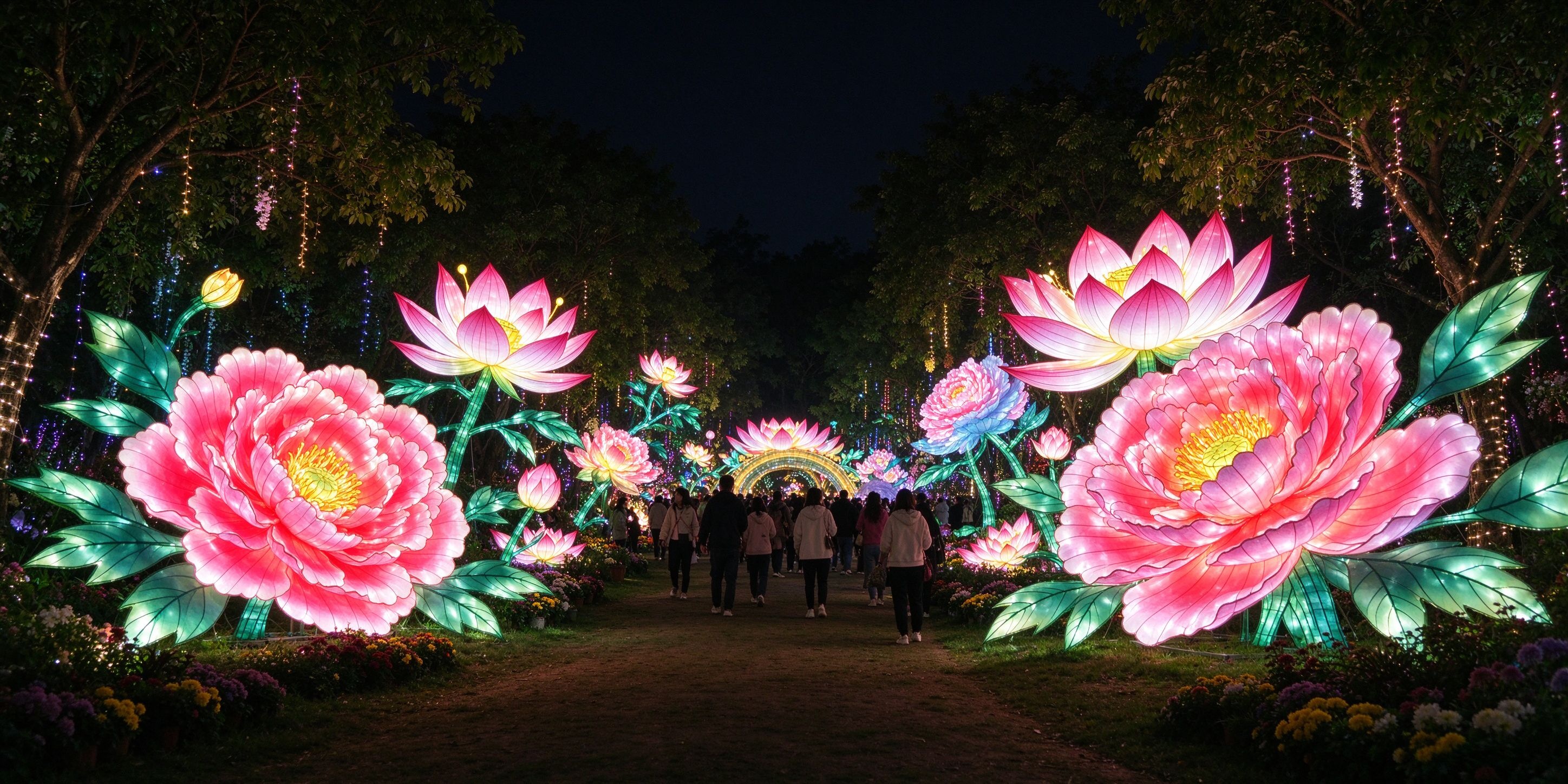
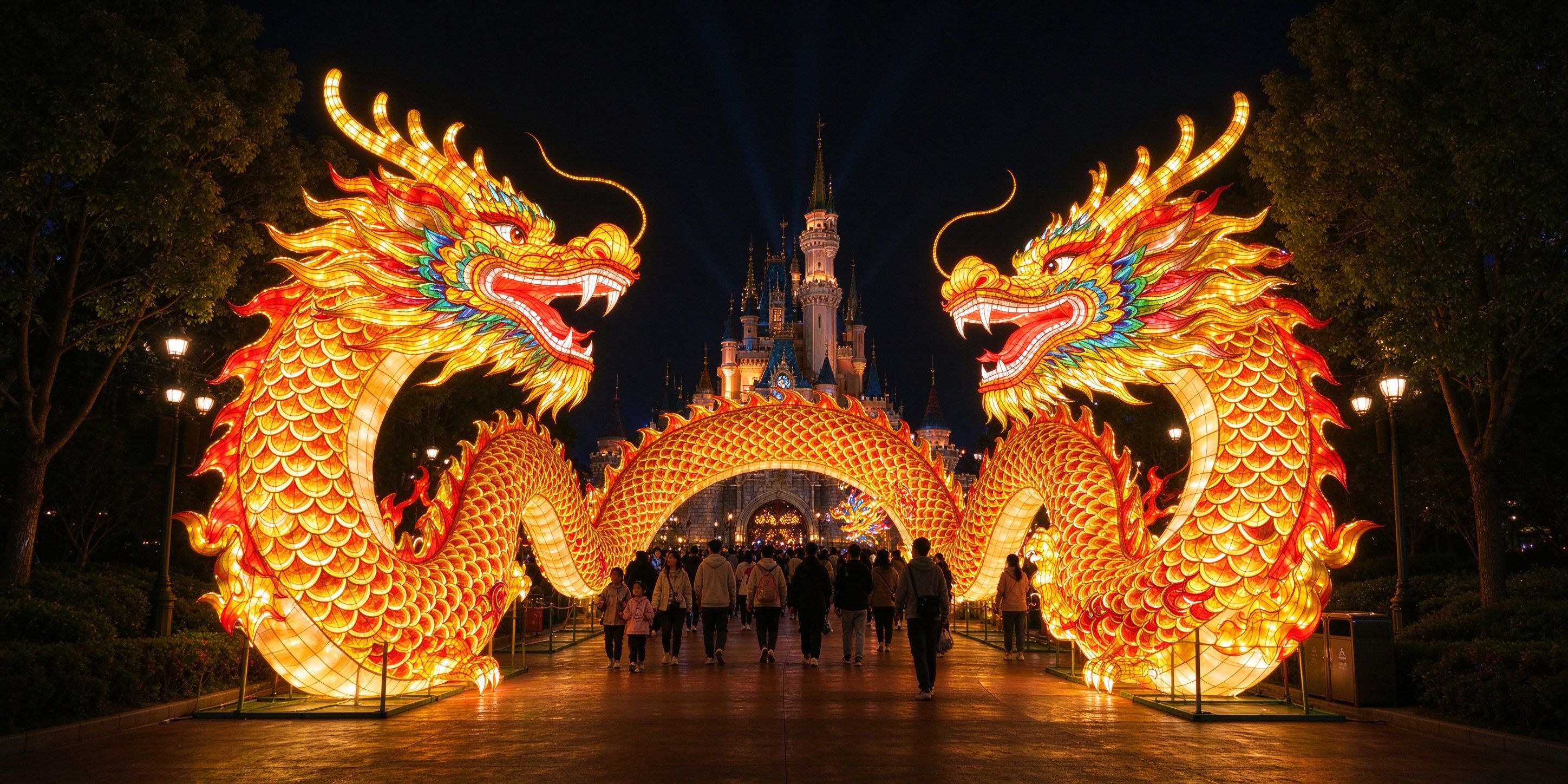
The Chinese lantern is one of the world's oldest continuous lighting traditions — a craft that began as a practical way to carry fire and evolved into an art form that now illuminates festivals on every continent. Understanding where lanterns come from explains why they still matter: the same desire to push back the darkness with colour, light and shared celebration drives a Han Dynasty palace and a modern mall's spring lantern festival alike. This is the story of that journey.
Origins in the Han Dynasty
The lantern's accepted origin traces to the Eastern Han Dynasty (25–220 AD), when Buddhism spread across China and Emperor Mingdi is said to have ordered lanterns lit in the imperial palace to honour the Buddha. What began as a religious observance — candles housed in paper or silk frames — quickly became a popular custom. The fifteenth day of the first lunar month, the first full moon of the new year, became the night when lanterns were hung, and the spring lantern festival was born. Even at this early stage, the lantern carried its essential social function: it brought people out of their homes after dark, into shared public celebration.
The Lantern Festival in Tang and Song
By the Tang Dynasty (618–907), the festival had grown into a state occasion. Cities were illuminated for several nights, and lanterns grew in scale and artistry — from simple hanging lamps to elaborate animal shapes and palace scenes. The Song Dynasty (960–1279) added the traditions we recognise today: lantern riddles written on paper strips, festival markets, and competitions among craftsmen to build the most impressive lanterns. It was during these centuries that the craft vocabulary of the Chinese lantern was set: bamboo or wood frames, paper and silk coverings, and the soft glow of a flame seen through translucent material. The aesthetics established a thousand years ago — round red lanterns, palace lanterns, animal and figure shapes — remain the visual language of a chinese new year lantern today.
Peak Craft in the Ming and Qing Dynasties
The Ming and Qing dynasties (1368–1912) carried lantern craft to its classical peak. Lantern fairs became civic spectacles, with silk lanterns of extraordinary refinement: painted panels, tasselled palace lanterns, and giant displays built around legends and myths. Regional schools of lantern-making emerged, and the city of Zigong in Sichuan grew into a centre of the craft — a tradition that continues to this day, as our own factory's home. The mid autumn lantern tradition also flourished in these centuries, with lanterns carried by children and displayed in gardens on the night of the full moon, alongside the mooncakes that define the holiday.
Cultural Meaning: More Than Light
Lanterns carry layers of meaning that explain their endurance. Red lanterns symbolise good fortune and happiness, and are hung at the lunar new year lanterns displays that greet families during the most important holiday of the year. The round shape of a palace lantern suggests reunion and completeness, which is why lanterns appear at weddings and family gatherings. Lantern riddles test wit and reward participation, making the festival an intellectual as well as a visual celebration. And the act of releasing or hanging a lantern — sending light upward — has long been associated with wishes, hope and remembrance. These meanings travel: when a Chinese lantern festival is staged in London, Sydney or Chicago, it carries the same emotional vocabulary across cultures.
The Zigong Connection
No history of Chinese lanterns is complete without Zigong. The city in Sichuan province, famed for its salt industry, developed a distinctive school of large-scale, engineering-driven lantern displays. By the twentieth century, the Zigong Lantern Festival had become the most celebrated in China — a multi-week spectacle of giant silk lanterns, animated scenes and crowd-pleasing hero pieces. The city's craftsmen turned the festival into an export industry, and modern Zigong factories now ship giant chinese lanterns and complete festivals worldwide. When you see a 30-metre illuminated dragon in a European zoo or a silk pagoda in a Middle Eastern mall, you are almost certainly seeing the descendant of the Zigong tradition.
The Modern LED Revival
The second great transformation came with electricity and, decisively, with LED lighting. Traditional craft — steel frames replacing bamboo, silk panels stitched over welded structures — combined with programmable LED systems to create lanterns that move, change colour and tell stories in light. The heritage pieces survive and thrive: the Chinese palace lantern and the red round lantern are still the icons of every festival. But they now stand beside animated dragons, interactive tunnels and light sculptures that would astonish a Song Dynasty craftsman. The craft's genius is its adaptability: the form survives because it keeps absorbing new technology while preserving its emotional core.
From Local Custom to Global Phenomenon
The final chapter is globalisation. Chinese lantern festivals are now staged on every inhabited continent: in botanical gardens, zoos, museums and city parks, often programmed across multiple holidays — a chinese new year lantern celebration in February, a mid autumn lantern display in September, and seasonal events through the year. What was once a regional custom has become a universal visual language for celebration, and the demand has built an industry: lantern festivals suppliers, design studios and factories now serve clients in more than forty countries. The koi fish lantern, the phoenix and the lotus that illuminated Chinese streets for two millennia — the koi fish lantern alone has been a festival staple for centuries — now glow in places their makers never imagined.
Conclusion
From a Han Dynasty palace lit for the Buddha to a programmable LED dragon in a Paris park, the Chinese lantern has spent two thousand years doing the same thing: bringing people together in light. Its history is a reminder that the most enduring design ideas are simple — a frame, a translucent skin, a warm light — and that craft plus technology is a combination that never goes out of style. Whether you are planning a traditional display or a modern light experience, you are continuing a tradition that began with a flame in silk. Our factory has been part of that tradition since 2002, building lanterns that honour the craft while embracing the technology of the future.
Ready to start your project? Contact the Lantern Festival team at our contact page or call +86 13990006666 for a free consultation and quotation within 48 hours.